
Games That Make You Smarter: How to Play So the Gains Last
Chess won't raise your IQ by ten points, but it can make you much better at looking three moves ahead.
Last updated: Nov 23, 2026
Read time: 9 min
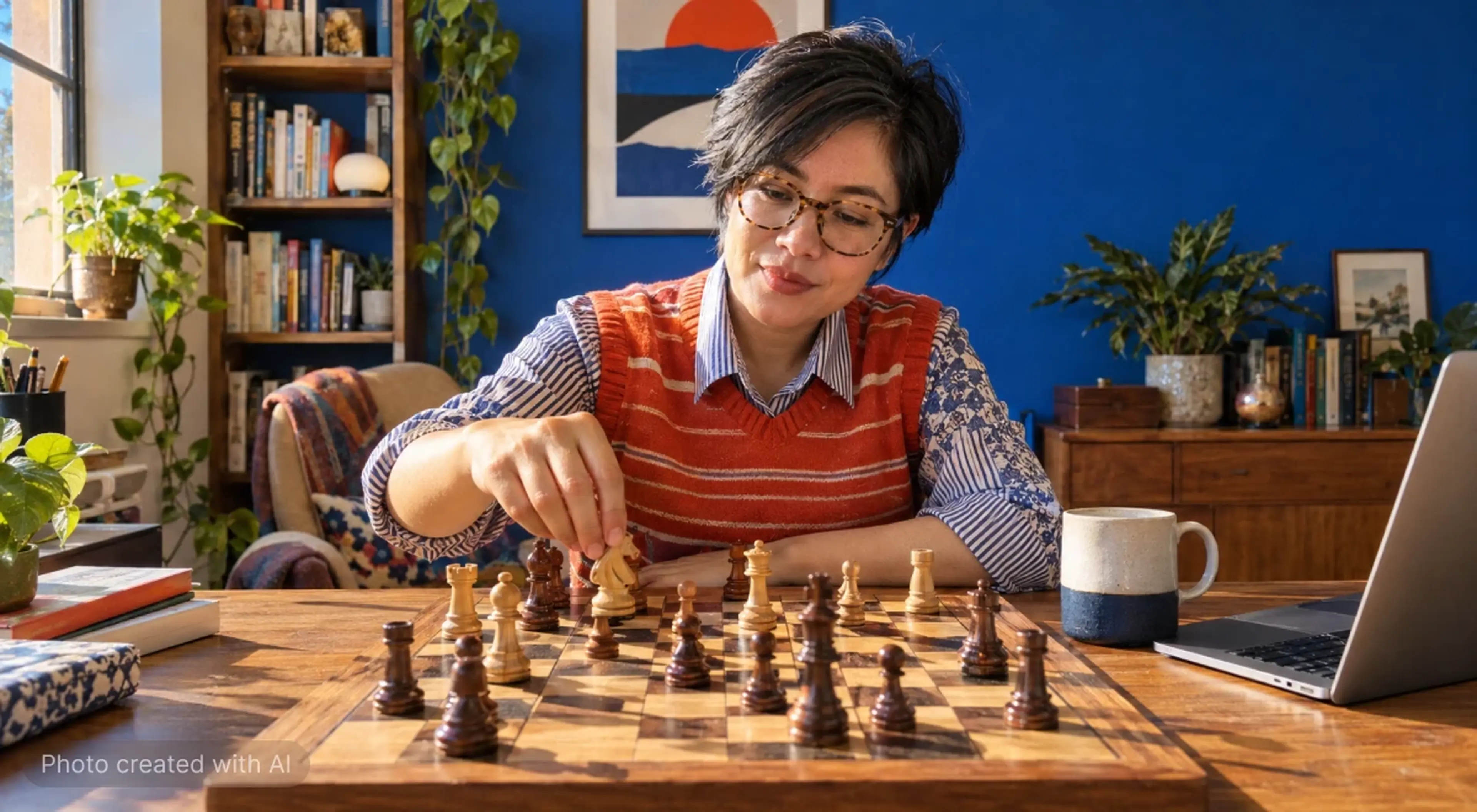

By Nadia Molnar
Master's in Education, 10+ years of organizing knowledge camps and trivia games
Nadia Molnar has a master’s degree in education and more than 10 years of experience organizing knowledge camps and trivia games.
The promise of games that make you smarter runs ahead of the evidence. A 2016 review of 132 studies that brain-training companies cited found that people get much better at the games they practice.
The gains shrink on similar tasks, and the evidence for everyday thinking is thin. That review looked at brain-training programs, not chess boards or commercial video games, so it can't speak for every game.
Games that make you smarter are games that repeatedly ask you to plan, remember, reason, or react, and that get harder as you improve. They sharpen specific skills. None has been shown to lift general intelligence on its own.
Below you'll find more than a dozen games sorted by the skill each one stresses, a quick-pick table, and five rules for keeping the benefit from flattening out. A few popular claims turn out shaky, so they'll be flagged.
🧠 If your idle phone time needs something that asks more of your brain than another scroll, a short game or lesson on Nibble is one place to start.
*Disclaimer: Results differ for everyone. Nibble is a microlearning and daily growth app, not a medical or clinical tool. Nothing in this article promises a higher IQ.
Quick summary: What the research lets you say about games that make you smarter, and what it does not
These points sum up what the evidence supports.
- Games train the skills they stress, such as planning or spatial reasoning.
- Brain-training software rarely raises general intelligence across the board.
- Chess, Go, and Portal 2 stress planning and spatial reasoning.
- Gains flatten once a game becomes automatic, so change the challenge.
- Add a quiz or lesson, so you pick up new facts too.
What games can and cannot do for your brain
Games that make you smarter at one task don't automatically make you smarter at the next. Researchers call that carryover transfer, which is when practice on one task improves a different task. Transfer is where most of the disappointment lives.
Different games target different cognitive skills. A fast-reaction game pushes processing speed, while a planning game stretches executive function.
Scientific research backs these narrow gains far better than it backs any claim about broader cognitive functions or overall intelligence. Dedicated brain training software rarely raises general fluid intelligence, and a gain in a lab test may never reach everyday life.
Then there's the plateau. Cognitive science suggests the benefit levels off once a game becomes purely automatic, because a task that no longer needs your attention stops asking much of your brain.
Working memory can be temporarily expanded by brain exercises like Dual N-Back, though "temporarily" is the word to underline.
Claims about cognitive benefits for older adults deserve the same care. A 2018 JAMA Psychiatry study followed 15,582 adults aged 65 and older in Hong Kong and linked daily intellectual activities, including board games and reading, to lower dementia risk.
It was observational, so it can't show that games caused the difference. Wider habits shape how you think too, and the guide to habits that build intelligence goes through them.
Pick a game by the skill you want to sharpen
Games that make you smarter tend to do it in narrow ways, so start with the skill you care about and let it pick your first game. This table is a quick map, and the next section looks at each game more closely.
| Skill | Games to try | What the game asks of you |
|---|---|---|
| Planning and strategy | Chess, Go, Civilization VI | Multi-step plans and adapting as things change |
| Spatial reasoning | Portal 2, Tetris, Monument Valley, Minecraft | Rotating, building, and positioning in space |
| Working memory and speed | Dual N-Back, Lumosity, reaction games | Holding and updating information fast |
| Resource management | Catan, Hive | Trading, positioning, and weighing options |
| Logic and problem solving | Sudoku, Zachtronics games, Kerbal Space Program | Breaking a problem into steps |
| Social and language skills | Animal Crossing, role-playing games | Cooperating, reading dense text, talking |
The games, grouped by the skill they stress
Each pick below gets a look at the mental skills it trains, one moment from the game, and an honest limit. Most people play for fun, so expect some great games with little research behind them.
Planning ahead: chess, Go and strategy games
Planning games ask you to commit now and pay for it later. Chess and Go heavily engage pattern recognition and multi-step planning, which is how a strong player glances at a board and sees where it's headed.
Say you give up a knight to pry open the other side's king. That sacrifice only makes sense if you've counted four moves ahead.
Chess can improve memory, concentration, and strategic thinking, though the evidence for general intelligence is less conclusive. A local chess league keeps the opponents coming.
Strategy and simulation games like Civilization VI let you steer a civilization through history and put you in complex situations where long-term planning and resource management decide everything.
If you'd like to practice the same skill away from the board, a few critical thinking exercises work just as well.
Spatial reasoning: Portal 2, Tetris, Minecraft, and Monument Valley
Spatial reasoning is the skill of rotating, fitting, and positioning shapes in your head. Portal 2 is a puzzle game that asks for it constantly, plus a feel for physics. Stuck in front of a gap too wide to jump? Drop through a floor portal, come out of a wall portal, and let your speed carry you across.
Minecraft encourages logical and spatial thinking too, since a working door or farm means you solve problems in three dimensions before you place a block. Tetris has a famous study behind it.
In 2009, 26 teenage girls played about 30 minutes a day for three months and showed a thicker cortex in some regions than a control group. Nobody knows if that means better thinking, and one researcher said Tetris practice mostly makes you better at Tetris.
Monument Valley is the calm option. You solve one puzzle at a time by rotating impossible staircases until the paths connect.
Memory and speed: Dual N-Back, Lumosity, and reaction games
Working memory is your ability to hold information in mind, like a phone number while you dial it, and daily life asks for that all the time. Games that challenge short-term memory and reaction speed can improve processing speed, which is how quickly you take in information and respond.
Dual N-Back is the classic memory task. You track a moving square and a spoken letter, then say when either matches the one from a few steps back.
Lumosity, from Lumos Labs, offers a library of cognitive games in short daily sessions, and Nintendo made a similar pitch with Brain Age on the Nintendo DS. The research caution from earlier applies most here. Beat Saber, a VR rhythm game, adds hand-eye coordination. The evidence behind any brain claim is thin.
Social and language skills: Role-playing and cooperative games
Social and language skills grow in games where other people, or a lot of text, are part of the puzzle. Role-playing games throw pages of dialogue and lore at you, so they may build reading and language skills.
Animal Crossing supports social skills when you play with others, because trading and visiting islands happen in real time. Augmented reality games add movement, since you walk around to play.
The research is thinner here than for planning or spatial games, and most of it describes what players do and says little about what they gain.
Low-tech picks: Sudoku, Catan, Hive and board games for kids
Low-tech games keep the same skills in play without a screen. Sudoku and other logic games improve logic and problem-solving, because you solve puzzles by ruling numbers out one at a time.
Catan and Hive both reward resource management and spatial positioning. In Catan, you trade for the brick you're missing, and Hive has no board at all, so every move shifts the whole shape and keeps even a short game interesting.
Board games may help children too. In well-known studies, preschoolers from low-income families played a number board game for a few short sessions. They got better at counting and comparing numbers, while kids who played a color version didn't.
That measured math only. Adults who want to rebuild their math skills can start with our guide on how to learn math as an adult. When Sudoku gets easy, Zachtronics games like SpaceChem, where you build chain reaction machines, and Kerbal Space Program raise the difficulty.
How to play so the benefit does not plateau
Games that make you smarter only keep working while they stay hard. A good one acts like a personal trainer and adds weight as you get comfortable. Automaticity is when a task no longer needs your attention, and it's the point where gains flatten. These five rules keep the challenges coming.
- Change the game or raise the difficulty once it feels automatic, because benefits flatten when a game is purely automatic.
- Mix skill types across the week, so a planning game on Monday is followed by a spatial puzzle on Thursday.
- Pick games that make you adapt your strategies in real time, since the rules can shift on you mid-match.
- Pair a game with a quiz or lesson, so you pick up facts along with skills.
- Check if you improved at one of your everyday tasks, like a math problem or a plan at work. Real life is a better judge than the game's score.
Video games may have an edge on the third rule, because a board game's rules sit still while a video game can change them on the fly.
A quick test for the first rule: if you can play while half-watching TV, the game has stopped testing your attention span. Keep sessions short and regular, and stop while it's still fun. Sleep and exercise matter too, and the guide to other ways to get smarter covers those.
Games that teach you something new: where Nibble fits
Most games train a skill, and a lesson adds knowledge. They work well together because a game makes you act while a lesson gives you something new to act on.
Nibble is an all-around knowledge app with 35+ topics and short lessons that run 1.5–15 minutes. It also has games that ask you to recall what you picked up: Complete the Picture, Build Up, This or That, Trivia Quiz, and Match the Pairs.
Say you read a short space lesson over lunch. Later, a Trivia Quiz asks what you remember. Pulling an answer out of memory instead of rereading it is called active recall, and learning research favors it.
The Logic topic sits in the same app for days when you'd rather reason than memorize. A For You feed suggests topics based on what you pick, and a daily streak nudges you back and keeps your brain active between games.
Fair warning: Nibble won't raise your IQ. It adds knowledge and a daily habit, and it's a subscription app. If you can't figure out what to study next, the guides on self-education and things to learn can help.
What Nibble users say about learning in spare minutes
Games and lessons stick when they fit into a real day. Here's how a few Nibble users describe the habit.
- Sarah Widmer, a real estate agent who uses eight learning apps, says Nibble "keeps teaching me things I didn't already know, things I can actually use." Read Sarah's story.
- Shae Legan wrote about why Nibble became the first thing to look forward to when the alarm goes off. Read Shae's story.
- Fredys Caballero finished 30 art lessons and says he now sees the world differently. Read Fredy's story.
- Bea Faklová explains how daily Nibbles built her self-discipline. Read Bea's story.
Pick one game this week, then add a ten-minute Nibble round!
Choose one skill from the table and play a game that stresses it for a week. Then add a quick quiz round, so you pick up a few new facts.
The games and daily streak turn spare phone minutes into something that feels better than a scroll. The lessons are light, so general knowledge builds up without feeling like homework.
🧠 Try your first round on Nibble and see which topic sticks.

FAQs about games that make you smarter
Which games increase IQ?
The evidence doesn't show that any game reliably raises general IQ. The 2016 review of brain-training research found gains mostly stayed within the practiced task. Better-supported results are narrow: chess and Go for planning, and Dual N-Back for short-lived working-memory gains. If an ad promises ten extra IQ points, treat it as marketing.
What game gives you the most IQ?
No single game wins, and "most IQ" is the wrong yardstick. IQ tests sample a small set of tasks, such as pattern puzzles and vocabulary, so a score can't capture everything a game trains. A better question is which skill feels weakest right now. Pick a game that leans on it, then check your progress on a real task.
What games make your brain smarter?
Five good starting points: Animal Crossing for cooperating with friends, Sudoku for logic, Monument Valley for spatial puzzles, Dual N-Back for working memory, and chess for planning. Each one exercises a single skill. Rotating through them across a week covers more ground than sticking with one favorite, and you'll spot which skill feels rustiest.
What games do ADHD people play?
People with ADHD play every kind of game, including shooters and farming sims. Players often describe fast feedback and short sessions as easier to stay with, though that's a pattern people report, not a rule. Games don't treat ADHD, so a clinician is the right person to ask about medical questions or focus problems at work or school.
How can I sharpen my brain?
Look beyond games. Sleep comes first, since your brain sorts new memories overnight. Regular physical activity is linked with better thinking skills later in life. Picking up a new skill, like a language or an instrument, keeps your mind working at the edge of what it knows. Time with friends counts too, because conversation is a mental workout.
What are the top 5 brain games?
A fair shortlist weighs evidence and fun. Chess has the longest track record for planning. Sudoku is a cheap, low-tech logic workout. Portal 2 stretches spatial thinking. A Lumosity session is a quick app-based option for memory and speed. Minecraft keeps problem-solving open-ended because you decide what to build.
Published: Nov 23, 2026

 128K+ ratings worldwide
Keep your curiosity sparked with Nibble
Join 10M+ people and discover bite-sized ideas across 35+ topics with an all-around knowledge app
