
Popcorn Brain Hits Scattered Scrollers Hardest at Night
When your thoughts won't sit still, there's a name for it. Keep reading to find your way back to focus.
Last updated: Nov 20, 2026
Read time: 7 min

By Nibble Team
Nibble's Editorial Team
Our editorial team loves exploring how things work and why. We’re guided by the idea that people stay curious throughout their lives — they just need engaging stories and ideas to reignite that curiosity.
The show's paused and the dishes are done, yet a thumb is already back on the home screen, flicking between apps without landing on any.
A restless feeling has a name: popcorn brain. It describes a human brain that has gotten so used to constant stimulation that it resists slowing down for a single task, even when nothing else demands attention. Some people only notice they're experiencing popcorn brain once they try to read a few pages and find their eyes sliding off the page every few seconds.
The pattern shows up most at night, once the day's screen time stops and the mind doesn't know what to do with the quiet.
Researchers tracking attention spans on screens found they fell from about two and a half minutes in 2004 to roughly 47 seconds by 2016, according to research cited by CNBC. That's not a diagnosis, but a documented shift in how the human brain handles the present moment when screens stay within reach.
Attention can be rebuilt the same way it got scattered: through small, repeated practice.
Spending a few minutes a day with Nibble is one way to give a distracted mind something to hold onto besides another feed.
The bottom line: What is popcorn brain and why does it happen?
Popcorn brain is a casual, non-clinical term for a mental state where thoughts jump around like popcorn kernels popping, making it hard to concentrate on one task for long.
- Popcorn brain describes scattered thoughts and difficulty concentrating after heavy screen time.
- Social media platforms use push notifications and autoplay to make users expect constant stimulation.
- A quick dopamine hit from short content reinforces the urge to keep checking the phone.
- Popcorn brain mirrors some ADHD-type behaviors, but it is not a clinical diagnosis like ADHD.
- Tech-free zones, time limits, and single-tasking can help the brain stay focused again.
The sections below unpack why this happens and what helps reverse it.
Why screens train the brain to crave constant stimulation
Apps are built to deliver constant stimulation. Autoplay, infinite scroll, and group chats keep a feed moving before boredom sets in, and each new post or reply triggers a small reward.
Social media platforms rely on bite-sized content because short, snackable posts keep people engaged longer than one long piece would. Every notification invites a return to the screen, activating the brain's reward pathways the same way a small win does.
That's the dopamine hit at work: a quick chemical nudge that makes checking the phone feel worthwhile, even when nothing important is waiting. A primitive drive to notice anything new or rewarding gets hijacked by a feed engineered to trigger it every few seconds, and browsing things to do instead of doomscrolling is one way to interrupt that loop.
Over time, this trains the brain to treat novelty as the default state, so slowing down for one task without that stimulation starts to feel wrong.
Electronic multitasking compounds the problem. Switching between email, texts, and feeds all day splits attention into smaller pieces, creating fragmented attention and mental overload rather than real focus.
Research has also linked heavy exposure to fast-paced digital media with more anxiety and irritability, and heavy short-video consumption appears to weaken executive functioning, the brain's ability to plan, filter, and stay on one thing.
Some of this behavior gets social reinforcement too: likes and replies tell the brain that checking in paid off, so it keeps coming back for more.
The attention-span timeline: From 2.5 minutes to 47 seconds
That same decline in screen-based attention has continued. Many digital tasks now hold a person's focus for well under a minute, and the average American spends roughly seven hours on screens every day, which is why taking a break from social media even briefly can feel so noticeable.
Computer scientist David Levy, whose research covers information difficulty and attention fatigue, has studied how switching contexts wears down sustained attention. His work, alongside other assistant professor-led research into digital habits, points to one conclusion: the brain adapts to whatever rhythm it is given.
Popcorn brain vs ADHD: How they differ
This pattern is situational and tied to digital habits. ADHD is a diagnosed, persistent attention difficulty that affects daily functioning no matter how much time someone spends on a screen.
| Feature | Popcorn brain | ADHD |
|---|---|---|
| Clinical diagnosis | No | Yes |
| Main cause | Constant notifications and screen time | Neurodevelopmental, present from childhood |
| Typical trigger | Extended period of social media or electronic multitasking | Not tied to specific triggers |
| Reversibility | Often improves with set limits and tech-free zones | Managed long-term, not "reversed" |
| Core symptom overlap | Scattered thoughts, difficulty concentrating | Difficulty concentrating, sustained attention challenges |
Five steps to regain focus this week — without deleting your apps
A few concrete changes can rebuild the ability to maintain focus without a full digital detox. Digital overstimulation fragments attention and causes mental fatigue, so the fix mostly means reducing how often your brain gets pulled in new directions.
- Set time limits on select apps. Capping how long you can spend on your most distracting apps each day is one of the simplest starting points.
- Mute the alerts that don't matter. Marketing emails and non-essential alerts can be muted while important notifications, like messages from family, stay on. Letting the important ones through while silencing the rest keeps the phone useful without keeping it noisy.
- Notice what pulls your focus. Self-awareness matters as much as any setting: noticing when online shopping or a group chat pulls focus from one task makes the pattern easier to catch next time. Learning how to stop doomscrolling often starts with naming the habit itself, since most scrolling happens on autopilot.
- Set up a screen-free space. Mental health organizations have pointed to screen-free spaces, like no phones at the dinner table, as a simple way to support focus and reduce stress.
- Swap one scroll session for something else. Swapping even one scroll session for a different activity gives the brain practice choosing a slower pace, and that small swap is often the first sign that focus is coming back.
Building a slower-paced life without quitting your phone
Fixing popcorn brain doesn't mean deleting every app. A slower-paced life means creating space for longer tasks, one choice at a time, rather than giving up devices.
Eye strain is often the first physical sign that screen time has run too long. Children pick up the same scattered pattern from parents, so modeling a slower pace at home helps the whole household.
Trying to use your phone less gradually, instead of all at once, makes the shift easier to stick with.
A useful way to rebuild attention: Structured microlearning
Microlearning gives the brain practice sitting with one thing, without cutting off the chance to engage with the world or technology altogether.
A few focused minutes on a single topic ask the brain to stay with one idea instead of jumping every few seconds. That's a different kind of practice than a feed built to keep attention moving, and it can help someone stay focused long enough to finish a thought.
It also builds a tolerance for working through different tasks back to back, something a feed of identical short clips never asks of anyone.
Nibble's Psychology topic turns the question of why the brain craves novelty into a short lesson. A quick round of Trivia Quiz or Match the Pairs works the same muscle differently, training the brain to sit with one task despite nearby distractions.
Readers curious about their own habits can start by identifying what is doomscrolling to put a name to the pattern, especially if screen time has started to feel like brain rot rather than rest.
A short phone addiction test can offer a clearer read on phone time than guessing ever will.
For anyone who wants to feel the difference firsthand, stepping away from feeds for even a day shows how much quieter an overloaded mind can get.
How three readers broke the scroll cycle with Nibble
Three Nibble users noticed their own version of popcorn brain and found a steadier rhythm without giving up their phones entirely.
Sarah Widmer had cycled through eight different learning apps, and most lost her interest within days as the novelty wore off. The one that finally held her focus is the subject of Sarah's user story.
Bea used to start a dozen habits and finish none of them, chasing whatever felt new instead of sticking with one thing. Committing to a single short round each evening rebuilt her follow-through, a shift she lays out in Bea's user story.
Shae treated slow afternoons and waiting rooms as scroll time by default until a short lesson became the thing she reached for instead. That swap now gives her day a steadier anchor than endless scrolling, something she describes in Shae's user story.
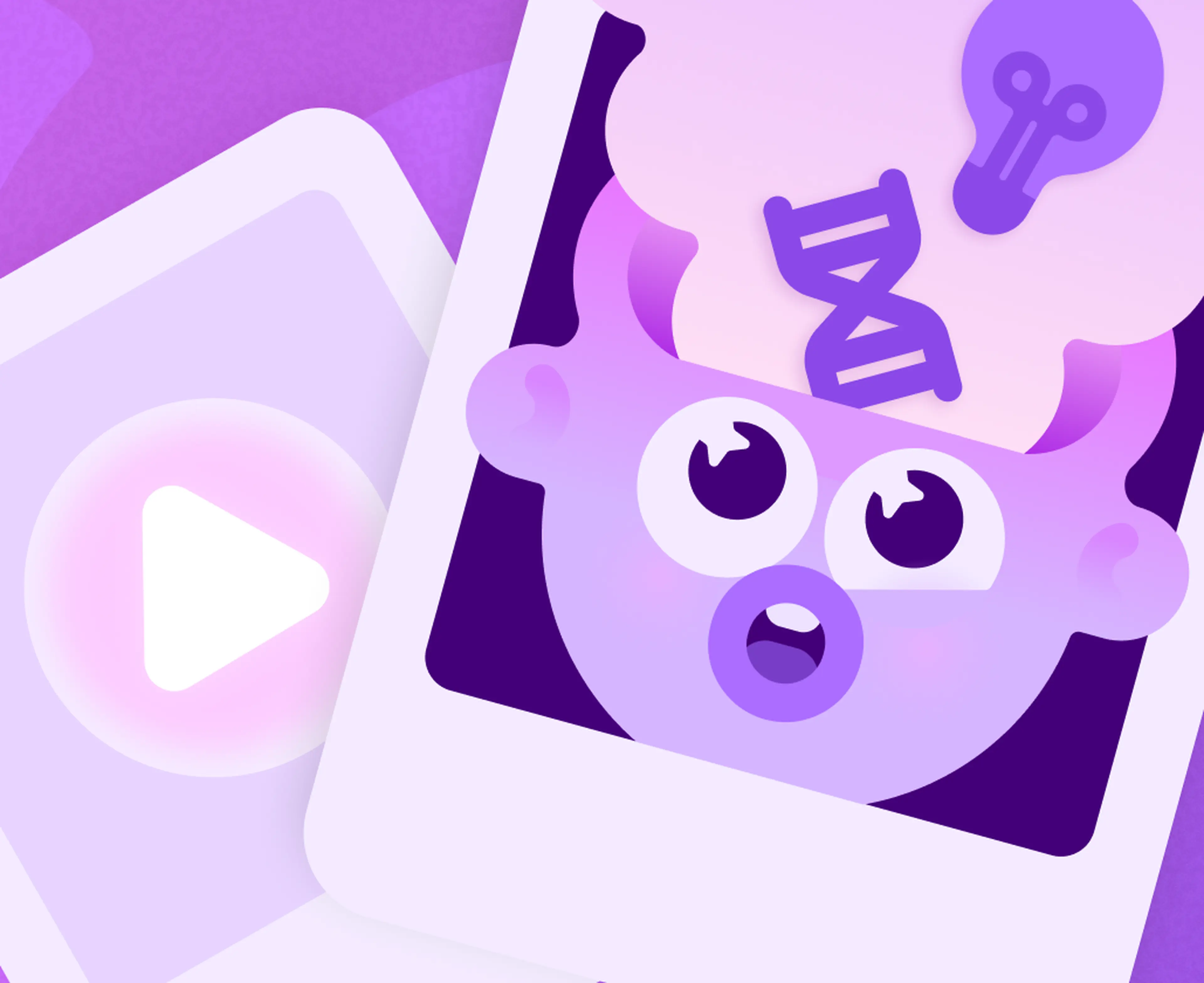
What if your mind had one tab open?
Nibble lessons give your mind one thing to sit with
Give your scattered mind one thing to hold onto with Nibble
Popcorn brain responds to small, repeated practice rather than sheer willpower. The same brain that adapted to constant stimulation can relearn sustained attention the same patient way it got scattered.
Nibble's short, structured lessons give a distracted mind a landing spot between the extremes of an infinite feed and total disconnection. Personalized topics, light games, and a few focused minutes a day turn idle phone time into something that builds knowledge instead of passing it, downloaded by millions of users looking for exactly that landing spot.
A single short lesson tonight is a small start — try Nibble.

FAQs about popcorn brain
Is popcorn brain a real medical diagnosis?
No. Popcorn brain is a popular term, not a diagnosis found in manuals like the DSM. It describes a mental state of scattered thoughts tied to heavy screen use. The American Psychiatric Association discusses related digital-habit concerns, but treats popcorn brain as a descriptive label rather than a formal condition like ADHD.
Who coined the term popcorn brain?
The phrase is often linked to research by computer scientist David Levy, whose work on information difficulty and attention fatigue examined how constant digital interruptions affect the ability to concentrate. His research helped popularize the idea that nonstop stimulation changes how the brain handles sustained attention over time, long before the term went mainstream online.
What is the number one brain food for focus?
Fatty fish and berries are often named as foods that support brain health and concentration, thanks to nutrients linked to memory and blood flow. Diet is only half the picture. Pairing better food choices with fewer interruptions and more single-tasking tends to support focus more completely than either strategy alone.
Can social media cause popcorn brain in kids?
Yes. Children's developing attention spans are especially sensitive to constant notifications and bite-sized content, since their ability to self-regulate screen time is still forming. Setting no-phone zones at home, like during meals, gives kids practice sitting with one task without constant digital pulls on their attention.
How long is the average human attention span now?
Attention spans vary by task, but the overall trend points downward, especially for screen-based activities that offer constant switching options. Longer, single-focus tasks like reading a book tend to hold attention differently than scrolling a feed, since there's no competing stimulation pulling focus away every few seconds.
How can I reset my brain from too much screen time?
Setting time limits on specific apps, muting non-essential alerts, and carving out phone-free zones are fast starting strategies. Practicing single-tasking, giving one task full attention before switching, rebuilds the ability to concentrate. Small, consistent changes work better than one abrupt break from devices.
Published: Nov 20, 2026
 128K+ ratings worldwide
Keep your curiosity sparked with Nibble
Join 10M+ people and discover bite-sized ideas across 35+ topics with an all-around knowledge app
