

1 unit • 5 lessons
How to Learn Chemistry From Scratch
Most people start learning chemistry by memorizing the periodic table, then stall at the first equation with nothing to hang it on. A table of symbols doesn't explain why your coffee works or why milk upsets some stomachs, so the facts slide right off.
Short answer: Start with chemistry you can feel: what caffeine does in your head, what happens to alcohol in your liver, why milk bothers some people, and why fizzy drinks tingle. Then test yourself with a quiz that ties those four together. The whole sequence takes about twenty minutes, which is one sitting.
What you need to start learning chemistry
Less than a lab coat's worth. If you've ever had a drink, you already own the examples.
You do not need a science background
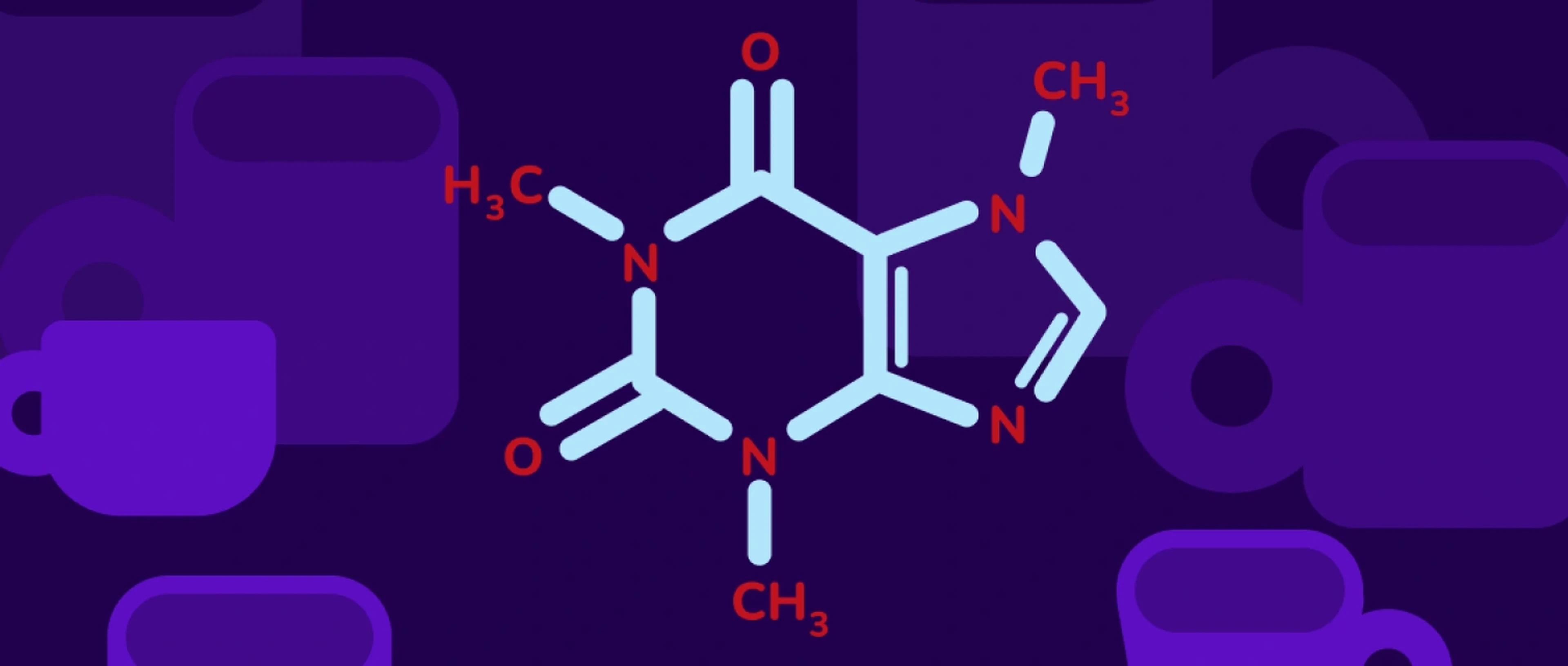
The track starts with a cup of coffee, not a diagram of an atom. The first lesson asks whether your morning coffee gives you energy or blocks your brain from knowing you're tired. You can answer that question without any chemistry, and the lesson is where you find out which one it is.
You do not need equipment or money to start learning chemistry
No lab kit, no goggles, no glassware, nothing to buy. The first lesson is free, and no card is needed to start. It's called How coffee wakes you up and runs about four minutes, which makes it a fair first evening.
You do not need to memorize anything first
There's no periodic table to learn before lesson one. The lessons begin from things you've tasted, and the molecules show up when they have a job to do.
The order to learn chemistry in
This track is one unit long, so there's one stage and an order inside it.
Stage 1: learn chemistry through your own body
Start with Chemistry in Your Body, the only unit here. It holds four lessons and a closing quiz, and the order inside it matters.
How coffee wakes you up comes first because it's the most concrete: one small molecule tricks your entire nervous system. What's happening when you drink alcohol? comes second. It starts from the idea that your liver works at its own pace, however much you drink, which builds on the first lesson's habit of asking what a molecule is actually doing.
Why does lactose cause problems for some people? is third. It's about one enzyme deciding whether milk feels fine or fills you with gas. Why do fizzy drinks tingle? comes fourth, and its twist is that bubbles aren't what makes the drink bite.
The quiz, Choose your drink like a chemist, closes the unit because it asks you to use all four. It wants to know what caffeine blocks and why your liver can't go faster, which only works once you've met both lessons

Common questions
Is there a certificate for learning chemistry?

No. Nibble lessons come with no certificate and no accreditation, so there's nothing to frame afterward. What you take away is an explanation: why coffee, milk, and soda do what they do in your body. If you need a formal credential, that's a different kind of course.
Can I do chemistry if I'm bad at math?
Yes. This track starts from drinks you've had, not equations, and it stops short of balancing equations and lab work. Later chemistry leans on more math, but you can build a real feel for how molecules behave long before you get there.
How can I study chemistry more easily?
Tie each idea to something you've actually experienced. Short sittings help, and explaining a lesson to someone else in your own words shows what stuck. Starting from coffee, milk and soda gives the molecules something to attach to, so the facts don't slide off.
Is Nibble a good app?
Based on thousands of Nibble reviews across the App Store and Google Play, users often highlight the short lessons, variety of topics, and the option to learn instead of scrolling.
- 10m+
Downloads (all platforms)
- 670+
Content added weekly
- 4.3
App Store 46k+ ratings
- 4.4
Google Play 128k+ ratings


Google Play
I feel it makes one think about things that you would definitely not think of doing in your everyday life. Always look at the bigger picture and try and fathom how to get out of a difficult situation. Think outside of the box.

Karen Slaughter
July 21, 2026

AppStore
Very informative — I really like Nibble. If you want to expand your knowledge I highly recommence nibble. It doesn’t cost that much either. Very affordable. It has many options on what to learn about.
Goddaughter81
Jun 13, 2026
Google Play
More fun than games — This gives me more satisfaction than any of my games, because it means something. I’m still going to play my word solitaire and word connect, but nibble is def in the rotation.
OK88s
Jun 10, 2026