
Chemistry
Chemistry in Your Body: How to Understand What Coffee and Alcohol Do Inside You
After this unit, you'll be able to explain in plain words why coffee makes you feel awake and what alcohol is doing inside you while you drink it. The lessons on coffee and alcohol cover those questions, and neither needs a chemistry background.
How to understand body chemistry
Your body is a very busy chemistry set. Everything in it, from the sugar in your blood to the thoughts in your head, is built from atoms (the tiny building blocks of matter) and runs on chemical reactions. The idea of the atom has a history of its own, and Dalton's atomic model is part of that history.
The usual beginner mix-up is picturing chemistry as beakers and a periodic table. Body chemistry starts with something you probably did this morning.
What makes it click is treating a drink like a visitor. It comes in, it meets other chemicals, and something changes. Ask what it meets and what changes, and a lot of the vocabulary turns out to be labels for those two answers.
How to understand what coffee does to your body
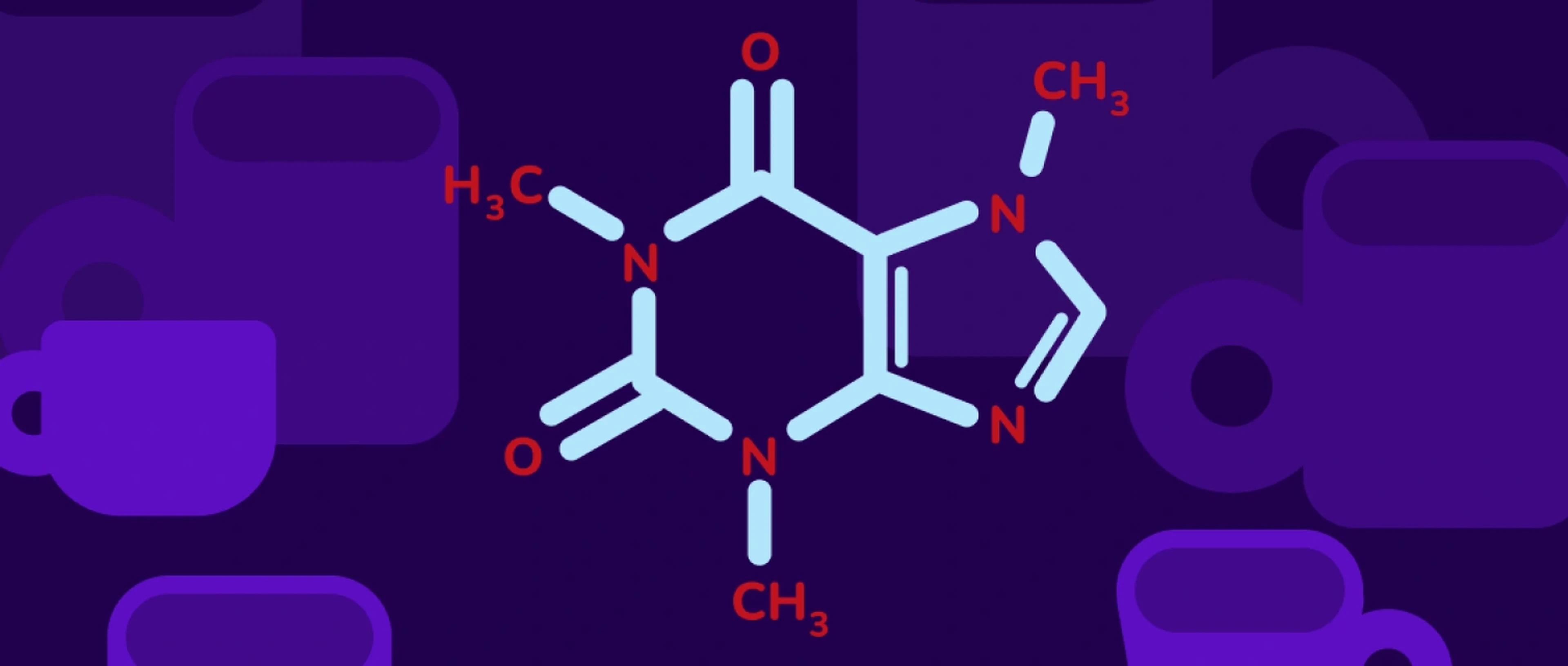
Caffeine doesn't hand you energy, it hides tiredness. Through the day, your brain builds up a chemical called adenosine, which nudges you toward sleep, and caffeine gets in the way of that signal. How coffee wakes you up is the lesson that asks how. It also explains why a second cup doesn't create energy from nothing: it keeps that signal muffled a little longer.
How to understand what alcohol does to your body
Alcohol surprises people, because a drink can feel like a stimulant, loud and loosened up, while it actually slows signaling in the brain. Your body also treats it as something to clear out, and the liver does most of that work. What's happening when you drink alcohol? is the lesson built around that question.
Where to start with body chemistry
This unit stands alone, so there's nothing to finish first and no chemistry background to bring. The first lesson is free, and no card is needed to start.
Nothing in the titles suggests the coffee lesson or the alcohol lesson has to come first. Take coffee for a gentler start, or alcohol if that's the question you've been carrying around. A science trivia round afterward is a casual way to see what stuck.
Where body chemistry fits in learning chemistry
Body chemistry is a friendly way into how to learn chemistry, because the examples are things you've already done. It also shows a pattern that much of chemistry follows: one kind of matter meets another, and something changes. If you'd like the living side of the picture, biology trivia is a small step to the side.
Lesson 1 of 5
How coffee wakes you up

Lesson 2 of 5
What's happening when you drink alcohol?

Lesson 3 of 5
Why does lactose cause problems for some people?

Lesson 4 of 5
Why do fizzy drinks tingle?

Lesson 5 of 5 • Quiz
Choose your drink like a chemist

Is Nibble a good app?
Based on thousands of Nibble reviews across the App Store and Google Play, users often highlight the short lessons, variety of topics, and the option to learn instead of scrolling.
- 10m+
Downloads (all platforms)
- 670+
Content added weekly
- 4.3
App Store 46k+ ratings
- 4.4
Google Play 128k+ ratings


Google Play
I feel it makes one think about things that you would definitely not think of doing in your everyday life. Always look at the bigger picture and try and fathom how to get out of a difficult situation. Think outside of the box.

Karen Slaughter
July 21, 2026

AppStore
Very informative — I really like Nibble. If you want to expand your knowledge I highly recommence nibble. It doesn’t cost that much either. Very affordable. It has many options on what to learn about.
Goddaughter81
Jun 13, 2026
Google Play
More fun than games — This gives me more satisfaction than any of my games, because it means something. I’m still going to play my word solitaire and word connect, but nibble is def in the rotation.
OK88s
Jun 10, 2026
Common questions
What is body chemistry?

Body chemistry is the set of chemical reactions that keep you running, from digesting food to passing signals between nerves. Every substance you swallow, coffee included, meets that machinery and gets changed by it. Understanding it means following what a substance does once it's inside you.
Do I need to know chemistry before learning how the body works?
No, you can start with everyday examples and pick up terms as they appear. Each idea comes down to what a substance is, where it goes, and what it changes. The vocabulary sticks more easily once you've watched it explain something you already notice, like feeling awake.
Is everything in the body a chemical?
Yes, in the sense that the body is made of atoms and molecules, and its processes are chemical reactions: water, sugar, and the signals between nerves all count. "Chemical" doesn't mean harmful. It just means matter, whether it came from a lab or a coffee bean.