
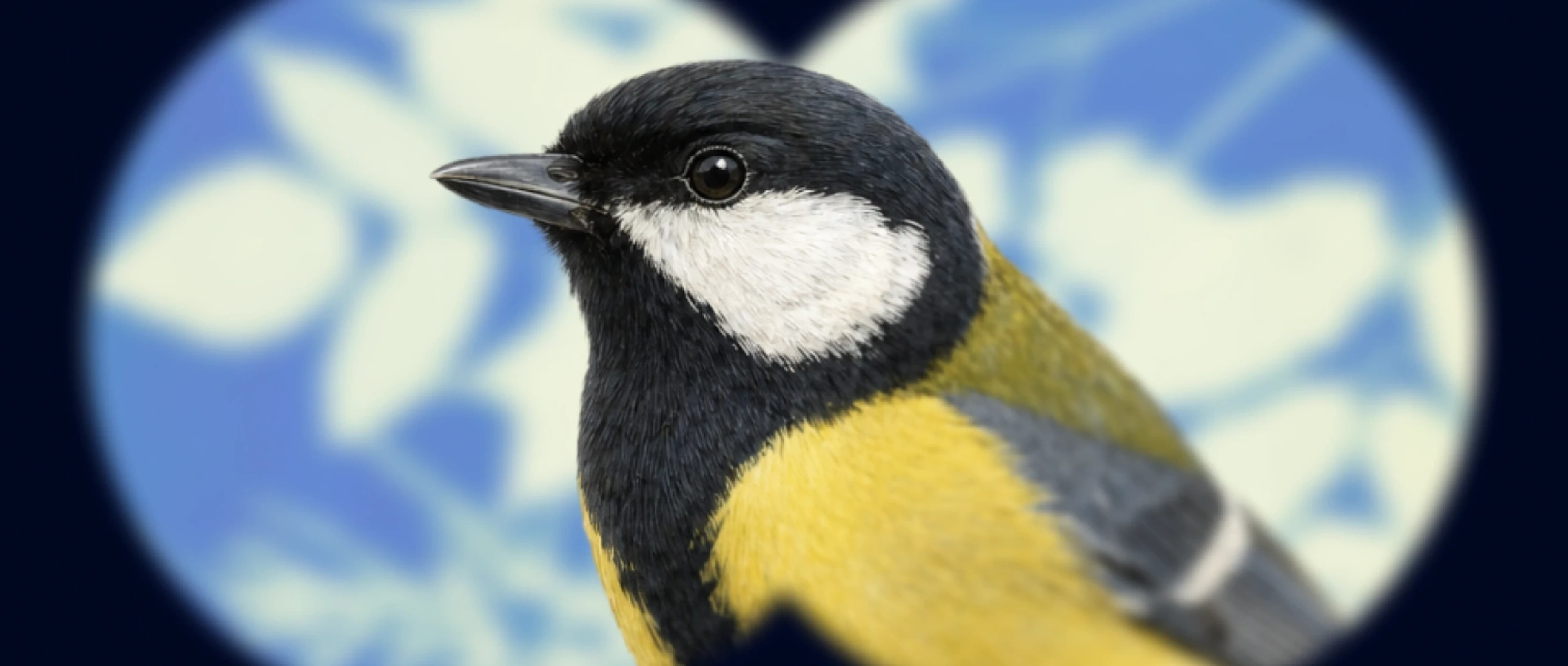
Ornithology
Birdwatching: How to identify birds, read the seasons, and go beyond your patch
These five lessons take birdwatching from a first look to longer-range practice. You'll learn to name the bird on that branch, track what shifts between seasons, and find species beyond your usual walk, so wherever you end up, the birds start to make sense.
How to understand birdwatching
Most people's first question isn't what species is that - it's closer to how am I supposed to notice anything before it flies away. Birdwatching has a reputation for requiring specialist knowledge, but the first real skill is simpler: train your eye on shape before color, and learn to slow down.
Reading birds: shape before color
A bird's silhouette tells you more than its markings when it's moving or backlit. Experienced birders talk about "jizz," the overall impression a bird gives through its size, posture, and movement, which lets you narrow the ID before your binoculars are up. Size relative to something familiar - "bigger than a starling, smaller than a wood pigeon" - is more useful than any absolute measurement. Birdwatching decoded goes through this vocabulary and how calls work as a parallel identification track.
The bird calendar matters too. A park that looks quiet in January can be almost unrecognizable in April - and that's not just migrants arriving; it's the same resident species in breeding plumage, singing for the first time. Birds through the seasons covers what drives these changes and what to look for across the year. Birdwatching tends to open curiosity about the wider animal world; animal trivia is a natural next read once you start wondering what else is going on in the places you're visiting.
What "local patch" means in birdwatching
Birders use "patch" for a stretch of territory you know well enough that any deviation from normal stands out. The logic is counterintuitive at first: you'll spot more over time in a familiar site than in a spectacular one you visit once. Birdwatching beyond the local patch picks up once the basics are in place - it covers when it makes sense to seek out unfamiliar habitats and how to read a new site when you arrive. Regularly noticing birds tends to open eyes to fascinating animals sharing the same spaces.
Where to start with birdwatching
This unit assumes nothing and stands alone - there are no other ornithology units on Nibble to move to before or after it. The sequence opens with first principles and builds toward seasonal awareness and longer-range birding. Your first steps in birdwatching sets the frame: start with the birds already around you, not with chasing anything rare. That order matters, because trying to identify something unfamiliar before you've confidently sorted the common local species is how beginners get discouraged early.
Birdwatching keeps appearing on lists of interesting hobbies for exactly this reason: the entry point is as low as looking out a window, and the learning curve is long enough to stay interesting. It turns up on new hobbies to try lists regularly too. Birding has grown steadily as a pursuit for adults who want something absorbing that doesn't require a fixed schedule or specialist gear to begin.
How birdwatching fits in learning ornithology
Ornithology is the science of birds: anatomy, behavior, evolution. Birdwatching is where most people first encounter that science, outdoors, applied to a real bird doing a real thing. This unit is currently the full extent of the ornithology content on Nibble, so there are no parallel units to move to next.



Is Nibble a good app?
Based on thousands of Nibble reviews across the App Store and Google Play, users often highlight the short lessons, variety of topics, and the option to learn instead of scrolling.
- 4.3
App Store 46K+ reviews in US
- 4.4
Google Play 128K+ ratings worldwide
- 10M+
Downloads worldwide across platforms
- 670+
Content pieces. New lessons weekly


Google Play
I feel it makes one think about things that you would definitely not think of doing in your everyday life. Always look at the bigger picture and try and fathom how to get out of a difficult situation. Think outside of the box.

Karen Slaughter
July 21, 2026

AppStore
Very informative — I really like Nibble. If you want to expand your knowledge I highly recommence nibble. It doesn’t cost that much either. Very affordable. It has many options on what to learn about.
Goddaughter81
Jun 13, 2026
Google Play
More fun than games — This gives me more satisfaction than any of my games, because it means something. I’m still going to play my word solitaire and word connect, but nibble is def in the rotation.
OK88s
Jun 10, 2026
Common questions
What's the difference between birdwatching and birding?

The terms are used interchangeably by most people. The distinction, where one exists, is in degree: "birding" tends to imply an active pursuit, sometimes traveling specifically to find species, while "birdwatching" is broader and includes casual observation. Neither word implies a particular skill level.
How do I learn to identify birds I see?
Start with shape and movement, not color. A bird's silhouette and posture narrow the possibilities before you get close enough to see markings. Calls work as a parallel track and are worth learning early. Familiarity with common local species builds the baseline; anything unusual becomes obvious against what you already know.
What is the best time of day to go birdwatching?
Early morning is the most productive, especially in spring and summer - bird activity peaks shortly after sunrise when most species are calling and feeding. Late afternoon is a reasonable second window. Midday is generally quieter, though waterbirds and raptors remain active across different times.
What does "local patch" mean in birdwatching?
A patch is a site you know well enough through regular visits that any deviation from the usual stands out. The advantage isn't rarity - it's familiarity. Most experienced birders track one patch closely and develop a reference point that makes unusual sightings much easier to recognize.