
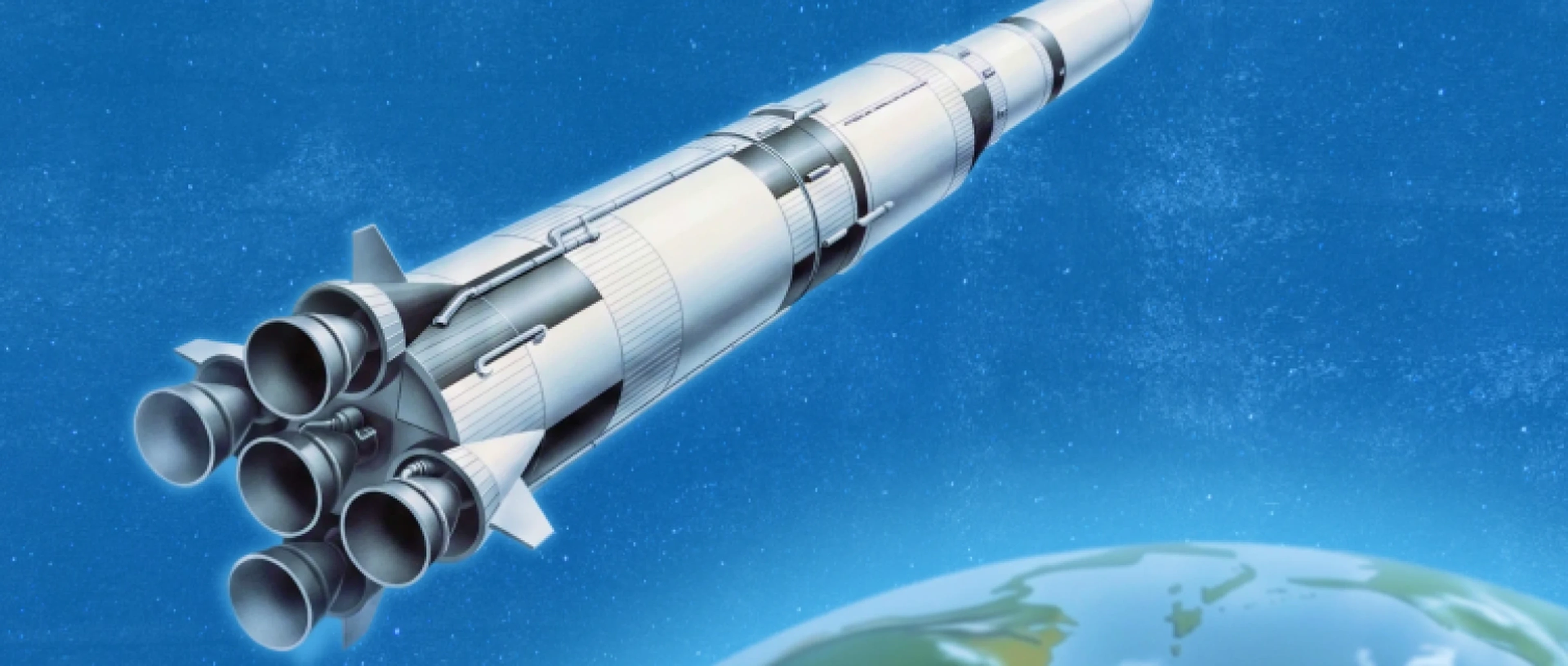
Engineering
The Engineering of Space Systems: How to Understand Rockets, Space Stations, and Mars Rovers
By the end of this unit, you can explain in plain words how a rocket reaches orbit, how people live on a space station, and how machines like a Mars rover survive where there's no air. The first lesson is free, and no card is needed to start.
How to understand how rockets, space stations, and rovers work
Space engineering sounds like a field for specialists, but it runs on one stubborn problem: Earth's gravity pulls on everything, and space is a place where nothing is built to survive. Every spacecraft is an answer to those two facts. Ask each machine how it gets there, and how it stays alive once it has.
How to understand how rockets reach orbit
Here's the part that surprises most beginners. Reaching orbit isn't mostly about going up. It's about going sideways fast enough that you keep missing the ground as you fall, and the gateway to space is the lesson that builds that picture. How gravity works is a handy companion, since gravity is both what a rocket fights on the way up and what keeps it circling once it's there.
How to understand life on a space station and survival in the void
A space station is a home that happens to be falling around the planet all the time. Life in orbit covers how one gets put together, and the view from up there is the reason people ask whether the Great Wall of China is visible from space.
Outside the walls, space brings no air, huge swings between hot and cold, and radiation. Surviving the void is the lesson for how engineers deal with that. Even a small question like whether space has a smell shows how strange the environment is.
Where to start with how spacecraft work
If you like following a mission in order, begin with the launch, then move to life in orbit, then the void, and finish with the Mars rover lesson, Inside a Mars rover. The lessons stand alone, though, so any order works. Starting with the rover is a good call if you're more curious about robots than rockets.
Some of this engineering has been sitting in another world for decades. A question like " Can you see the flag on the Moon?" is a good example of what's left behind after a mission.
How space engineering fits into learning engineering
If you're working out how to learn engineering, this unit is where the ideas get extreme: the same physics you'd meet in a bridge or an engine, pushed to the point where one mistake can't easily be fixed on site.
Nothing before it is required. Flying in the atmosphere is a natural companion, since it experiences the same gravitational pull toward the ground.
Lesson 1 of 5
The gateway to space

Lesson 2 of 5
Life in orbit

Lesson 3 of 5
Surviving the void

Lesson 4 of 5
Inside a Mars rover

Lesson 5 of 5
How well do you know these space systems?

More units in Engineering


Is Nibble a good app?
Based on thousands of Nibble reviews across the App Store and Google Play, users often highlight the short lessons, variety of topics, and the option to learn instead of scrolling.
- 10m+
Downloads (all platforms)
- 670+
Content added weekly
- 4.3
App Store 46k+ ratings
- 4.4
Google Play 128k+ ratings


Google Play
I feel it makes one think about things that you would definitely not think of doing in your everyday life. Always look at the bigger picture and try and fathom how to get out of a difficult situation. Think outside of the box.

Karen Slaughter
July 21, 2026

AppStore
Very informative — I really like Nibble. If you want to expand your knowledge I highly recommence nibble. It doesn’t cost that much either. Very affordable. It has many options on what to learn about.
Goddaughter81
Jun 13, 2026
Google Play
More fun than games — This gives me more satisfaction than any of my games, because it means something. I’m still going to play my word solitaire and word connect, but nibble is def in the rotation.
OK88s
Jun 10, 2026
Common questions
Ask two questions of each machine: how does it get to space, and how does it survive there?

A rocket answers the first by building up enough sideways speed to stay in orbit. Stations and rovers answer the second by handling a lack of air, extreme temperatures, and radiation.
How do I understand why things stay in orbit?
Objects in orbit are falling toward Earth, but they're moving sideways so fast that the ground curves away beneath them. Gravity never switches off. That's why a space station doesn't float off or crash down, and why a rocket needs sideways speed, not just height, to stay up.
What makes space so hard to engineer for?
Space has no air, so there's nothing to breathe or to carry heat away. Temperatures swing sharply between sunlight and shade, while radiation remains constant. Add the cost of fixing anything far from home, and every system has to work on its first try.