

3 units • 11 lessons
How to Learn Physics From Scratch
Most people who try to learn physics start with the wrong search. They go straight for quantum mechanics or black holes, hit a wall of advanced concepts, and walk away thinking the subject isn't for them. The real way in is through the question every physicist learns to ask first: what does this experiment actually prove?
Short answer: begin with the Experiments unit, which covers Newton's prism and Schrödinger's cat - two moments that forced physics to rewrite what it thought it knew. Move to The Physics in Space, where those same principles meet the conditions of deep space. Finish with Aeronautics, where the physics of lift has three completely different answers. One pass through the Physics track takes roughly 44 minutes.
What you need to start learning Physics
Less than most people assume. Physics has a reputation for demanding extensive preparation - but that reputation belongs to professional physics, not to understanding how it actually works.
You do not need a math background
The course is about how physicists think: noticing something unexpected, designing a precise test, and accepting a result that overturns an assumption. The forces physics explores - from how magnetic fields work to the mechanics of keeping a spacecraft in orbit - are concepts first and equations second. Nothing in these lessons involves a formula.
You do not need equipment or materials
No textbooks, no kit, nothing to buy outside the subscription. The lessons run on any screen, and the first one starts completely free - no card needed. You don't have to prepare anything before opening it.
You do not need a scientific background
The Experiments unit begins with Newton holding a prism up to a beam of sunlight and asking one precise question about the nature of color. That moment is the starting point, not a prerequisite for it.
The order to learn Physics in
Stage 1: Start with how physicists actually think
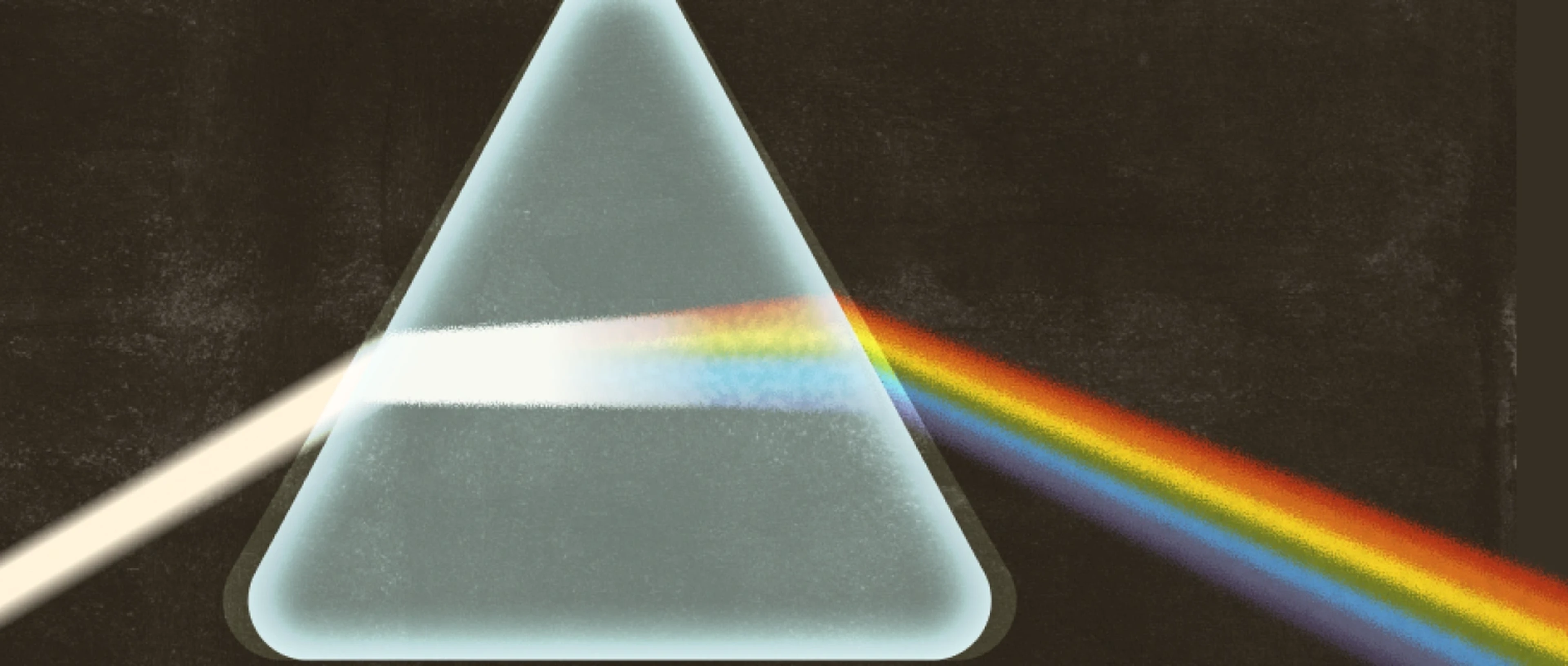
Start with Experiments. The Newton's prism lesson covers one of the most decisive moments in the history of optics: a single setup that proved white light isn't a single thing at all, but a mixture of every color light can be. The Schrödinger's cat lesson takes a different angle - a thought experiment designed to expose an absurdity in quantum theory, which then became one of the most widely debated ideas in physics. Together, they build the habit of mind that carries through the rest of the track: treat every obvious assumption as something a good experiment might overturn.
Stage 2: Physics at the edge of what humans can survive
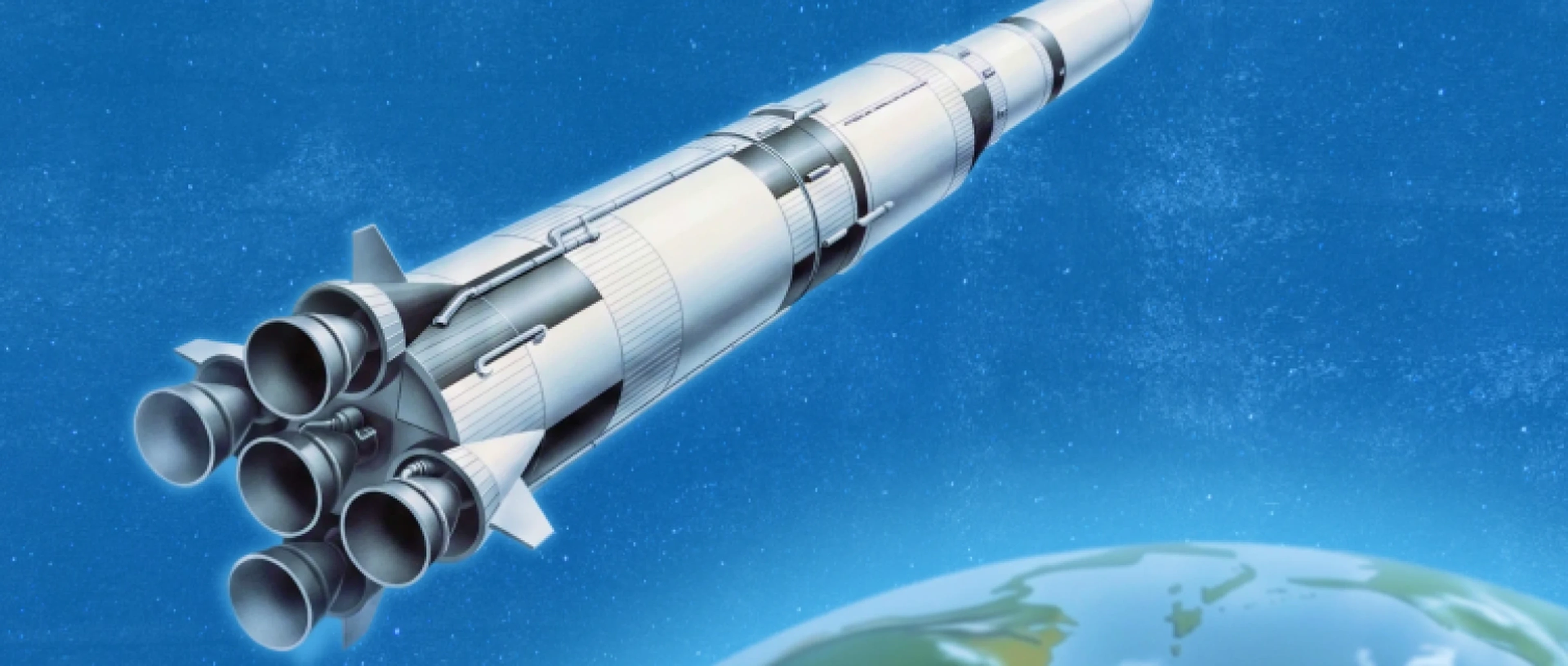
The Physics in Space takes the same experimental approach and drops it into one of the most demanding environments ever engineered for. You learn how rockets generate enough force to leave Earth's atmosphere, why the International Space Station maintains its orbit instead of falling, what a space suit is actually defending against in the vacuum of open space, and how a Mars rover keeps functioning on a world where no rescue is possible. How gravity actually works matters differently at this scale - it shapes the physics of getting to orbit, surviving outside the station, and operating machinery across 225 million kilometers.
Stage 3: Three aircraft, three approaches to physics
The Aeronautics unit changes the scale from orbit to the everyday sky. Three problems, three solutions: a fixed-wing aircraft that needs speed to generate lift, a helicopter that solves flight by rejecting the need for forward motion, and a dirigible that avoided the lift problem entirely by being lighter than the air around it. Each lesson stands well enough on its own to revisit at any point if one type of aircraft is what drew you here in the first place.


Common questions
How do I explain physics simply?

Physics is the study of why matter and energy behave the way they do - forces, motion, heat, and the rules governing all of it. The simplest entry isn’t a definition; it’s a concrete question: why does a prism split white light? Why doesn’t the ISS fall? Starting with a phenomenon you can picture makes any explanation click faster than starting with theory.
What are the basic definitions of physics?
Physics is the natural science of matter, energy, force, and motion. The main branches are mechanics (how things move), thermodynamics (heat and energy), electromagnetism (electric and magnetic forces), and quantum mechanics (behavior at subatomic scales). Most everyday physics - gravity, flight, light - falls under mechanics and thermodynamics, which is also where most introductory learning starts.
What are the four basic principles of physics?
Four that most introductory courses build around: Newton’s laws of motion, conservation of energy, the laws of thermodynamics, and quantum mechanics. Newton covers how forces change motion; energy conservation means it changes form but doesn’t disappear; thermodynamics adds heat and entropy; quantum mechanics governs behavior at the smallest scales. Most beginner learning starts with Newton and works from there.
Does Nibble give a certificate for the Physics track?
No. Nibble is a learning app for curious adults, not an accredited course. The Physics track doesn't come with a certificate, a grade, or a credential of any kind. What it gives you is a clearer way of thinking about why forces behave the way they do - and that's reason enough to work through it.
Is Nibble a good app?
Based on thousands of Nibble reviews across the App Store and Google Play, users often highlight the short lessons, variety of topics, and the option to learn instead of scrolling.
- 4.3
App Store 46K+ reviews in US
- 4.4
Google Play 128K+ ratings worldwide
- 10M+
Downloads worldwide across platforms
- 670+
Content pieces. New lessons weekly


Google Play
I feel it makes one think about things that you would definitely not think of doing in your everyday life. Always look at the bigger picture and try and fathom how to get out of a difficult situation. Think outside of the box.

Karen Slaughter
July 21, 2026

AppStore
Very informative — I really like Nibble. If you want to expand your knowledge I highly recommence nibble. It doesn’t cost that much either. Very affordable. It has many options on what to learn about.
Goddaughter81
Jun 13, 2026
Google Play
More fun than games — This gives me more satisfaction than any of my games, because it means something. I’m still going to play my word solitaire and word connect, but nibble is def in the rotation.
OK88s
Jun 10, 2026