
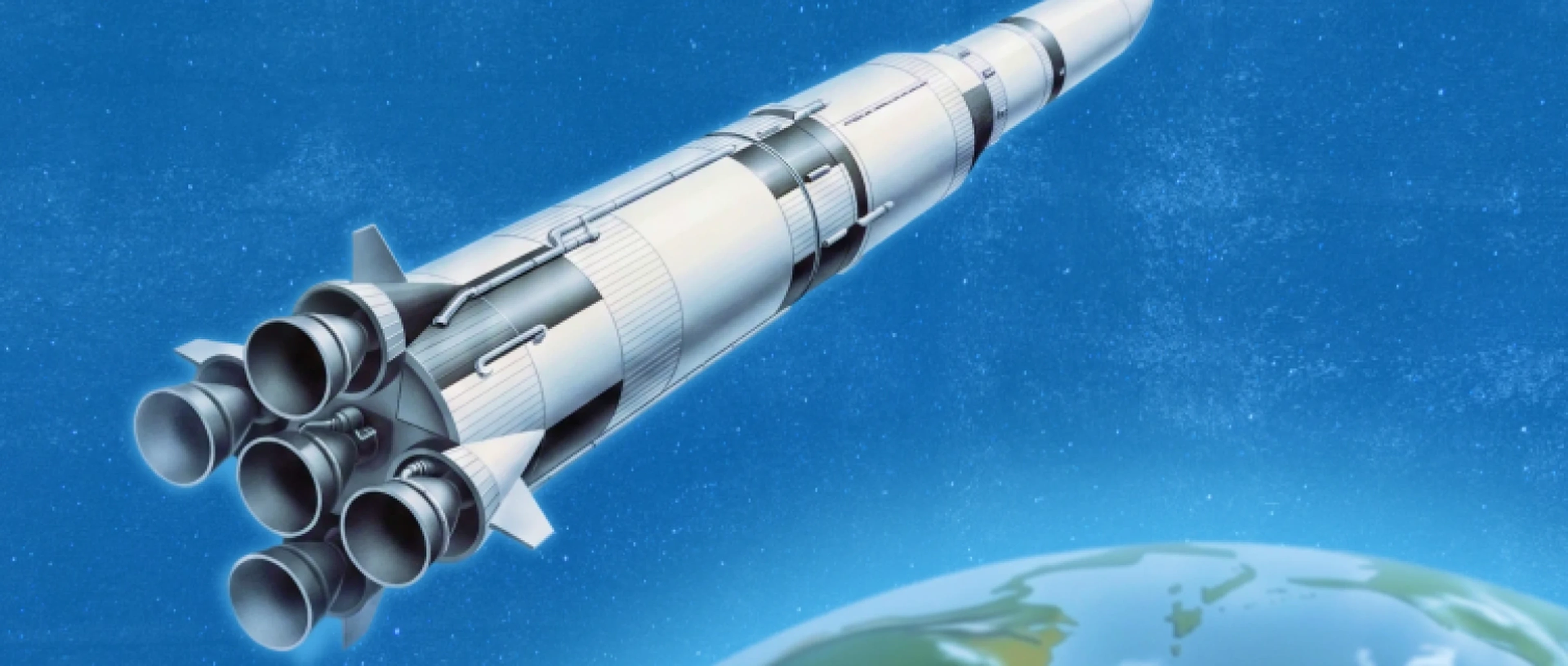
Physics
The Physics in Space: How to Understand Rockets, Orbits and Spacecraft
After this unit, you'll be able to explain how rockets reach orbit, how space stations get built, and what goes inside a Mars rover. It's the physics of spaceflight in plain words, so the next launch you watch comes with your own running commentary.
How to understand how rockets and spacecraft work
Space physics sounds like it needs a degree, yet most of it rests on two ideas you already half-know. A rocket works like a balloon you let go of: it throws something backward and gets shoved forward.
An orbit is what happens when something keeps falling and keeps missing the ground. Once those two click, a lot of spaceflight stops looking like magic.
How rockets reach orbit
Most beginners picture a rocket climbing straight up and then parking. Orbit is really about sideways speed, enough that the ground curves away as fast as you fall toward it. That's the question behind The Gateway to Space, which covers how rockets reach orbit. Space isn't a place without gravity, and the pull at a station's height is still strong.
Another common mix-up is thinking space starts at a wall. The air simply thins out the higher you go, so there's no clean line to cross. A rocket pushes through the thickest air first, then builds its speed where there's far less to slow it down.
How space stations and Mars rovers work
The crew on a station float because everything up there, people included, is falling together. Building anything in that setting is its own puzzle, and Life in orbit takes it on through how space stations are built. Inside a Mars rover opens up a machine made for another planet.
Machines out there share one rule: nobody can pop over with a screwdriver. That shapes how a station goes together and how a rover gets designed. The unit also includes Surviving the void, which is about getting through the empty stretch in between.
Where to start with rockets and spacecraft
Start with The gateway to space. Getting off the ground comes first on any trip, so it makes a natural opener. The first lesson in a unit is free with no card needed, and across all four lessons nothing calls for equipment or a purchase.
From there, follow whatever tugs at you.
Where rockets and spacecraft fit in learning physics
This unit points physics at hardware instead of lab benches. It doesn't lean on any other unit in the topic, so it works as a first stop or a detour. For the wider map, start with how to learn physics and pick the next unit from there.
Lesson 1 of 5
The gateway to space

Lesson 2 of 5
Life in orbit

Lesson 3 of 5
Surviving the void

Lesson 4 of 5
Inside a Mars rover

Lesson 5 of 5
How well do you know these space systems?


Is Nibble a good app?
Based on thousands of Nibble reviews across the App Store and Google Play, users often highlight the short lessons, variety of topics, and the option to learn instead of scrolling.
- 4.3
App Store 46K+ reviews in US
- 4.4
Google Play 128K+ ratings worldwide
- 10M+
Downloads worldwide across platforms
- 670+
Content pieces. New lessons weekly


Google Play
I feel it makes one think about things that you would definitely not think of doing in your everyday life. Always look at the bigger picture and try and fathom how to get out of a difficult situation. Think outside of the box.

Karen Slaughter
July 21, 2026

AppStore
Very informative — I really like Nibble. If you want to expand your knowledge I highly recommence nibble. It doesn’t cost that much either. Very affordable. It has many options on what to learn about.
Goddaughter81
Jun 13, 2026
Google Play
More fun than games — This gives me more satisfaction than any of my games, because it means something. I’m still going to play my word solitaire and word connect, but nibble is def in the rotation.
OK88s
Jun 10, 2026
Common questions
How do rockets work in space if there's no air to push against?

Rockets don't push against air at all. They throw hot exhaust out the back, and that exhaust pushes the rocket the other way, so a vacuum doesn't stop it. Rockets also carry their own oxygen to burn their fuel, which is why the engine keeps firing where there's nothing to breathe.
How do orbits work?
An orbit is a fall that keeps missing. Gravity pulls a spacecraft toward Earth, but it's also moving sideways so fast that the ground curves away beneath it as quickly as it drops. Balance those two, and the spacecraft circles the planet without needing constant engine power to stay up.
How do things move in space if there is no gravity?
Things keep moving because of inertia, not because gravity is missing. Space does have gravity, and it bends the paths of spacecraft around planets. But an object already moving through a vacuum has nothing to slow it down, so it keeps its speed and direction until a force acts on it.